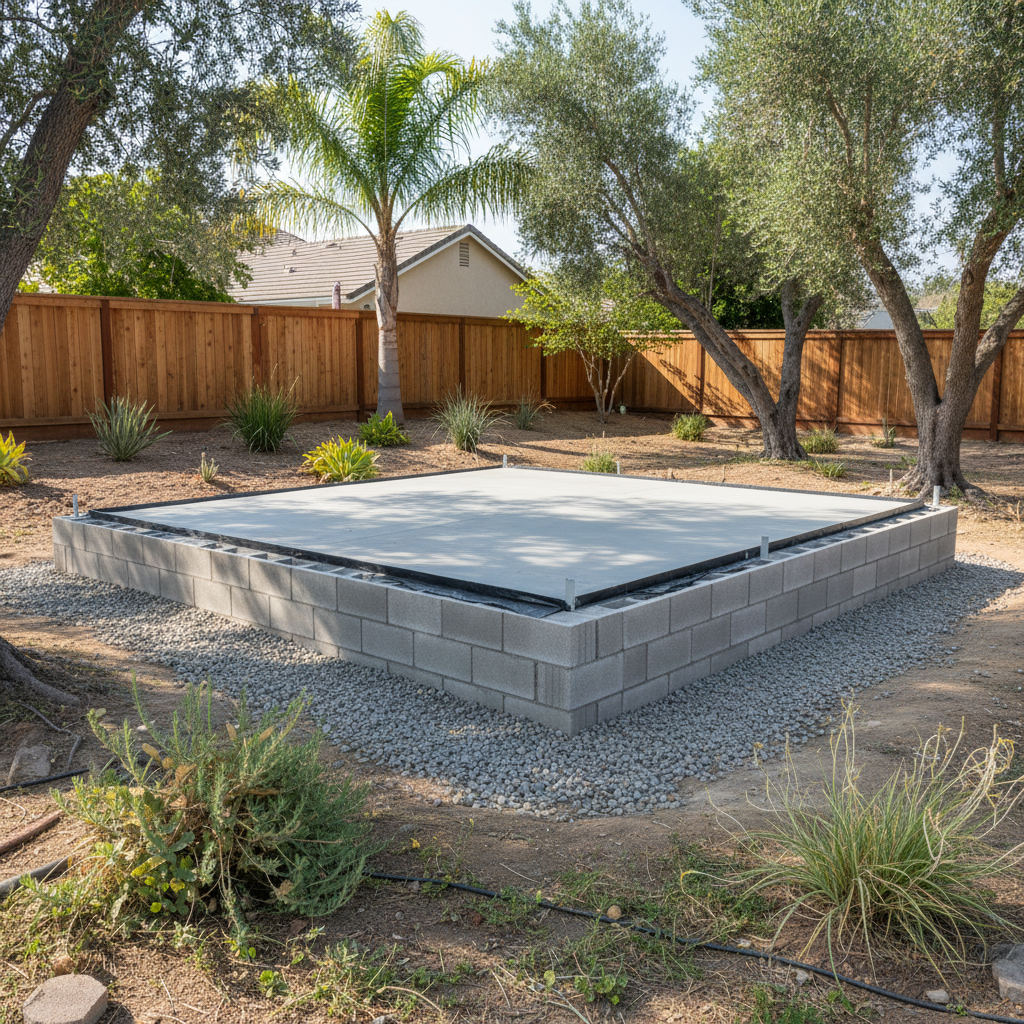
You're ready for that new shed, right? Maybe it's for extra storage, a workshop, or even a backyard office. That's fantastic! But before you start picturing your tools all neatly organized or your new desk set up, let's talk about the foundation. I see a lot of folks in La Mesa mess this part up, and it can really derail a project, costing you more than just a headache down the road.
Ignoring Soil and Slope
This is probably the biggest blunder I see, especially with some of the varied terrain we have around here — everything from the flatter areas near Lake Murray to the hillier spots in Mount Helix. You can't just drop a shed down and expect it to be level and stable without knowing what's underneath. Our soil, in some places, can be pretty expansive. That means it swells when wet and shrinks when dry. If you don't plan for that, your foundation will shift, crack, and eventually, your shed will be totally out of whack. I've actually seen sheds that look like they're doing a lean dance because the homeowner didn't bother to get a proper assessment of their yard's grade and soil type.
A good contractor will always check the slope. If your yard isn't perfectly flat (and let's be honest, most aren't), you'll need to either dig it out, build it up, or use piers to get a level base. Trying to cut corners here is a surefire way to end up with a wobbly shed, doors that won't close right, and even structural damage over time. Don't just assume your yard is 'flat enough.' Get it checked, seriously.
Skimping on the Foundation Type
There are different kinds of foundations for a reason: concrete slab, gravel pad, concrete piers, even treated wood skids for smaller sheds. Each has its good points and bad, and more importantly, its proper uses. You wouldn't put a heavy, permanent workshop on a few concrete blocks sitting right on dirt, would you? But I've seen people try. They think a shed is 'just a shed' and doesn't need a serious foundation.
A concrete slab is often the best bet for larger, heavier sheds or ones you plan to use for a long time, especially if you're going to have heavy equipment inside. It gives you a solid, level, and moisture-resistant base. A properly installed gravel pad can work for smaller, lighter sheds, offering good drainage. The mistake usually happens when people pick the cheapest option without thinking about the shed's size, weight, what they'll use it for, and the local climate. We get some decent rain here in the winter; a poor foundation means your shed's floor is going to get wet, leading to rot and mold.
Forgetting About Drainage
Water is the enemy of any structure, and sheds are no exception. A lot of folks focus on getting the foundation level but completely forget how water will drain around and away from it. If your foundation sits in a puddle every time it rains, you're going to have problems. This circles back to understanding your yard's slope and soil. You need to make sure water flows away from the shed, not towards it or underneath it.
This might mean grading the ground around the foundation, putting in French drains, or just making sure your downspouts aren't dumping water right next to the shed. It's not just about keeping the inside dry; constant moisture around the foundation can really mess with its integrity, causing settling and cracking. You want your shed to last, right? Then you've got to think about water management from day one.
Hiring the Wrong Crew (or Doing It Yourself Poorly)
Look, I get it. You want to save a buck. And if you're handy, you might think,