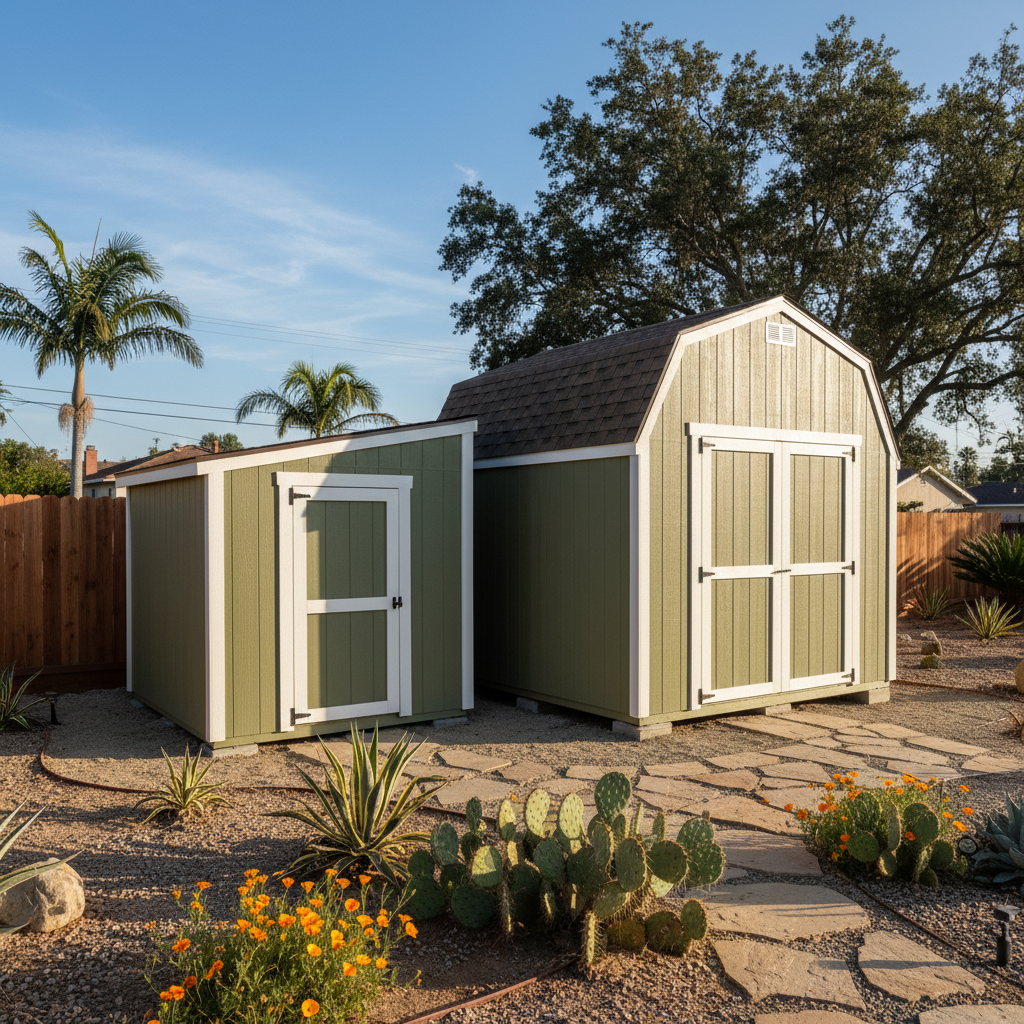
Alright, let's talk sheds here in La Mesa. You're probably thinking about adding one to your yard, or maybe you've got one already and just want to make sure it lasts. Either way, the biggest thing folks often overlook is how our local weather really impacts these structures — and when it's best to get things done.
When's the Best Time to Build a Shed in La Mesa?
People ask me all the time, "When's the ideal time to build?" My answer's usually pretty straightforward: try to avoid the wettest parts of winter. We don't get a ton of rain here, but when it comes, it can be a real pain for construction. Pouring a concrete foundation, for instance, is a lot easier and cures better when it's not constantly damp or freezing. Yeah, 'freezing' is rare for us, but you get my drift. The ground can get saturated, making excavation messy and slowing down the whole process. Nobody wants that.
I'd say late spring through early fall is generally prime time. You've got long, sunny days, and the ground's usually dry and stable. That means quicker foundation work, better conditions for painting or staining, and less chance of weather delays. Plus, if you're doing any landscaping around the shed, the plants will establish better in milder weather.
Weather Conditions That Affect Shed Work
Beyond just rain, we deal with a few other things here in La Mesa that can throw a wrench in the works. Wind is a big one. We get those Santa Ana winds occasionally, and trying to put up walls or a roof during a 30 mph gust isn't just tough, it's flat-out dangerous. We'll always keep an eye on the forecast for that. Then there's the heat. Summer days can get pretty brutal, especially inland from the coast. Working outside in 90-degree heat isn't fun, and it can affect how materials behave, too. Adhesives might cure too fast, or wood can expand more than usual. We plan our days around it, starting early to beat the worst of the afternoon sun.
Another thing to consider, especially if you're in an older neighborhood like Mount Helix with more mature trees, is falling leaves and debris. If we're doing a roof, we'll want to make sure it's clear. It's not a huge deal, but it's another little thing that adds time if you're not planning for it.
Protecting Your Shed Investment Year-Round
Okay, so you've got your shed. Maybe it's one we built at La Mesa Custom Sheds, or maybe it's an older one you're trying to spruce up. Now, how do you keep it looking good and working well for years? It's not just about building it right; it's about smart maintenance.
- Drainage is King: This is probably the most important thing. Make sure water isn't pooling around your shed's foundation. Our soil here can be pretty clay-heavy in spots, which means it doesn't drain super fast. If water sits, it'll eventually compromise your foundation and can lead to rot in the lower parts of the shed walls. Check your gutters if you have them, and make sure the ground slopes away from the shed.
- Seal and Paint Regularly: Our sun is intense. It'll beat down on your shed day after day, year after year. That UV exposure breaks down paint and sealants. I recommend checking your shed's exterior every couple of years. If the paint's fading or peeling, or if the wood looks dry, it's time for a fresh coat. This isn't just for looks; it's your primary defense against moisture and rot.
- Ventilation Matters: Especially in our humid mornings and hot afternoons, condensation can be an issue inside a shed. Good ventilation prevents mold and mildew, and it keeps your stored items in better shape. Make sure any vents aren't blocked, and consider adding more if your shed feels stuffy or damp.
- Clear Debris: Keep leaves, branches, and dirt away from the base and off the roof. Debris holds moisture against the structure, which is exactly what you want to avoid. A quick sweep of the roof and around the perimeter a few times a year goes a long way.
- Pest Patrol: La Mesa has its share of critters. Ants, spiders, even rodents can find their way into sheds. Keep an eye out for any signs of them and take action quickly. Seal up any small gaps or cracks you find in the siding or around the foundation.
It's all about being proactive. A little bit of attention throughout the year will save you a lot of headaches and money down the road. Treat your shed like a mini-house, and it'll serve you well for decades.